Get Help With Your Miami Wine Cellar
Whether you’re planning a custom residential wine cellar, glass-enclosed wine room, condo wine cellar or commercial wine storage project in Miami, choosing the right cooling system begins with understanding the conditions of the space.
Contact Wine Cooling Pro for personalized guidance on selecting the right wine cellar cooling solution.
Toll Free: 866-901-9463
Professional Wine Cooling Solutions for Miami Wine Cellars
- Creating the right environment for long-term wine storage requires more than simply lowering the temperature of a room.
- A properly designed wine cellar needs stable temperature, appropriate humidity, controlled airflow and cooling equipment selected according to the conditions of the space.
- Wine Cooling Pro provides wine cellar cooling systems for Miami, Florida, along with expert guidance for homeowners, wine collectors, builders, designers and commercial clients planning climate-controlled wine storage.
- Whether you’re building a custom wine cellar, designing a glass-enclosed wine room, converting an existing space or replacing an older cooling system, we can help you compare solutions based on cellar size, construction, insulation, glass exposure, ambient conditions and installation requirements.
Wine Cellar Cooling Systems Available in Miami
Wine Cooling Pro offers several cooling configurations for residential and commercial wine storage projects.
Through-the-Wall Wine Cooling Units
Through-the-wall wine cooling units provide a self-contained solution installed directly through the cellar wall.
Because the cooling components are contained within a single unit, these systems do not require separate condensers or ductwork.
They can be a practical option for:
- Residential wine cellars
- Walk-in wine rooms
- Closet conversions
- Under-stair wine storage
- Renovation projects
- Condos and apartments where appropriate
- Smaller commercial wine storage areas
Through-the-wall systems release heat into the adjacent space behind the unit. The size, temperature and ventilation of this area should therefore be evaluated before choosing this type of system.
Ducted Wine Cellar Cooling Systems
Ducted wine cooling systems allow the equipment to be positioned away from the wine cellar while conditioned air is delivered through insulated ductwork.
This configuration keeps cooling equipment out of sight and helps reduce noise and vibration inside the cellar.
Ducted systems can be particularly appropriate for:
- Custom wine cellars
- Glass-enclosed wine rooms
- Luxury residential projects
- Commercial wine displays
- Design-focused cellars
- Projects where quiet operation is important
Ducted Split Wine Cooling Systems
Ducted split systems separate the evaporator and condenser, providing additional flexibility when planning a custom wine cellar.
The evaporator can be installed in or near the cellar and connected through insulated ductwork, while the condenser is positioned remotely where adequate heat dissipation is available.
This configuration can be useful for larger or more complex projects where equipment location, noise, aesthetics and heat rejection are important considerations.
Ductless Split Wine Cooling Systems
Ductless split systems also separate the evaporator and condenser but do not require ductwork.
The evaporator is installed directly within the wine cellar, while the condenser is located remotely and connected through refrigerant and electrical lines.
This can provide an effective alternative when duct installation is difficult but quieter operation and flexible condenser placement are desired.
Choosing the Right Wine Cooling Unit in Miami
Wine cellar cooling equipment should not be selected based on cubic footage alone.
Room dimensions provide the starting point for calculating cooling capacity, but the actual cooling load can be influenced by several additional factors.
A proper assessment should consider:
- Cellar length, width and height
- Total cubic footage
- Wall and ceiling insulation
- Vapor barrier quality
- Glass doors and walls
- Type and quantity of glass
- Door construction
- Cellar location within the building
- Exterior wall exposure
- Direct sunlight and solar gain
- Temperature of surrounding spaces
- Lighting and other heat sources
- Condenser or exhaust location
- Ventilation
- Desired temperature and humidity
- Cooling system configuration
Considering these variables together provides a more accurate basis for selecting the appropriate system and capacity.
Temperature & Humidity Control for Miami Wine Cellars
Temperature and humidity both play an important role in maintaining a stable wine storage environment.
- Wine Cooling Pro generally recommends maintaining wine cellar temperatures around 55°F to 57°F (12°C to 15°C) with approximately 50% to 70% relative humidity.
- Too much humidity can contribute to mold and damage to labels and racking materials, while humidity that is too low can cause corks to dry out.
- This makes humidity monitoring an important part of wine cellar climate control.
- Depending on the cellar conditions, the selected cooling equipment and the surrounding environment, additional humidity management may need to be considered.
Glass Wine Cellars & Cooling Requirements Miami
Glass also needs to be included when calculating cooling requirements.
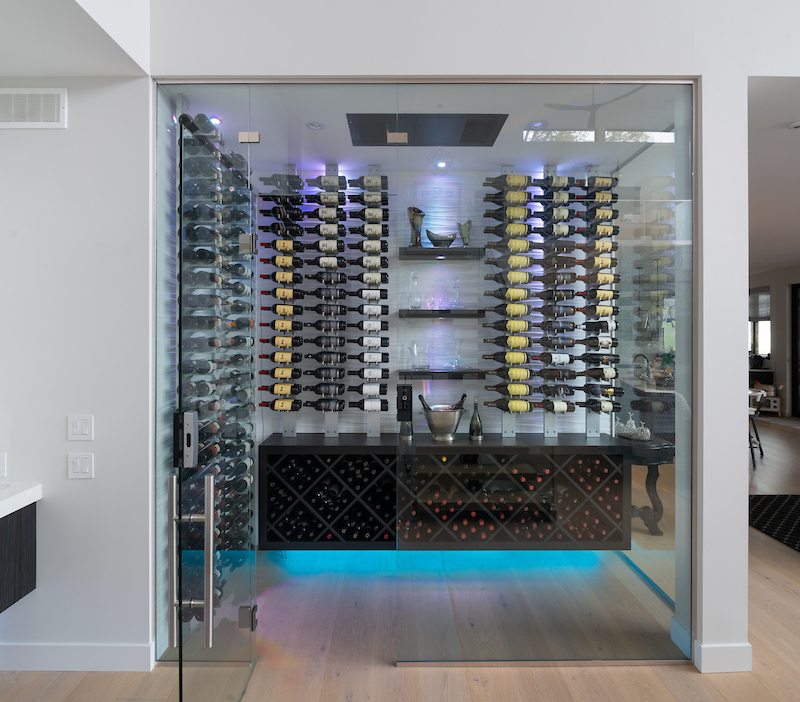
Glass-enclosed wine rooms can create a modern, highly visible display for a wine collection, but glass also needs to be included when calculating cooling requirements.
Compared with properly insulated walls, glass can increase heat gain and place additional demand on the cooling system.
Important factors to evaluate include:
- Total amount of glass
- Type of glazing
- Airtight seals and frames
- Direct sunlight exposure
- Surrounding room temperature
- Insulation in remaining walls and ceiling
- Overall cellar volume
Ducted and split systems can also provide additional design flexibility for glass wine rooms where minimizing visible equipment and mechanical noise is a priority.
Proper Wine Cellar Construction Matters
Even high-performance wine cooling equipment can struggle if the cellar itself is not properly constructed.
The wine room should create a complete thermal envelope that helps control heat and moisture exchange.
Important construction considerations include:
- Appropriate wall and ceiling insulation
- Proper vapor barrier
- Airtight cellar doors
- Weather stripping and door sweeps
- Insulated glass where applicable
- Sealed electrical and lighting penetrations
- Appropriate flooring and finishing materials
- Condensate drainage
- Proper ventilation and heat rejection
- Accessible equipment placement for maintenance
Careful construction helps the cooling system maintain more consistent temperature and humidity while reducing unnecessary equipment strain.
Condensation & Moisture Considerations
Moisture management should be considered during both cellar construction and cooling system installation.
A properly installed vapor barrier helps prevent warm, moisture-carrying air from entering the cellar and creating condensation.
Depending on the cooling system, condensate drainage may also be required.
Important considerations include:
- Correct vapor barrier placement
- Properly sealed walls, doors and penetrations
- Insulated glass where applicable
- Appropriate condensate drainage
- Insulated ductwork for ducted systems
- Correct equipment installation
Addressing these details during the planning stage can help protect the cellar, finishes and cooling equipment.
Residential & Commercial Wine Cooling Solutions
Wine Cooling Pro offers cooling solutions for a range of Miami wine cellar applications, including:
- Custom residential wine cellars
- Walk-in wine rooms
- Glass-enclosed wine cellars
- Under-stair wine storage
- Closet conversions
- Condo and apartment wine storage
- Restaurant wine storage
- Commercial wine displays
- Hospitality environments
- Larger custom wine storage rooms
Each project should be evaluated according to its individual construction, environmental conditions and installation requirements.
Find the Right Size Wine Cooling Unit
Proper sizing is essential for reliable wine cellar climate control.
An undersized cooling system may struggle to maintain stable conditions and place unnecessary strain on the equipment. Incorrectly oversizing a system can also affect performance.
Wine Cooling Pro provides access to specialized cooling calculators and sizing tools from manufacturers including:
- Wine Guardian
- WhisperKOOL
- CellarCool
- CellarPro
Depending on the manufacturer, these tools can account for factors such as:
- Cellar dimensions
- Insulation
- Vapor barriers
- Glass exposure
- Ambient temperature
- Construction materials
- Cellar location
- Equipment placement
Wine Cooling Pro can also help review your cellar specifications and compare appropriate equipment options.
Why Choose Wine Cooling Pro for Your Miami Wine Cellar?
Wine Cooling Pro helps simplify the process by providing:
Selecting the right wine cooling equipment requires looking at the entire cellar environment rather than simply choosing a unit according to advertised room capacity.
Wine Cooling Pro provides:
- Wine cooling system selection guidance
- Cooling load and sizing support
- Product comparisons
- Installation planning guidance
- Temperature and humidity recommendations
- Technical information for homeowners and contractors
- Access to leading wine cooling manufacturers
- Residential and commercial cooling solutions
- Ongoing technical assistance
Our goal is to help you identify a cooling solution suited to the actual conditions and requirements of your wine cellar project.
Miami Wine Cellar Cooling FAQs
Wine Cooling Pro offers wine cellar cooling equipment from established manufacturers.
- What temperature should a wine cellar be kept at in Miami?
Wine Cooling Pro generally recommends maintaining wine storage temperatures around 55°F to 57°F (12°C to 15°C) with minimal fluctuations.
- What humidity level should a wine cellar maintain?
Wine cellars generally aim for approximately 50% to 70% relative humidity. Both excessive and insufficient humidity can negatively affect the wine cellar environment, so actual conditions should be monitored.
- Why is a vapor barrier important in a wine cellar?
A vapor barrier helps limit moisture exchange between the conditioned cellar and surrounding environment. Proper vapor barrier installation can help reduce condensation and support stable cellar conditions.
- Can condensation become a problem in a wine cellar?
Condensation can occur when warm, moisture-carrying air reaches colder cellar surfaces. Proper insulation, vapor barriers, sealing, glass selection and cooling system installation all play a role in moisture management.
- Does a glass wine cellar require more cooling?
Glass can increase heat gain compared with properly insulated walls. The amount and type of glass, direct sunlight exposure and surrounding conditions should be considered when calculating cooling requirements.
- How do I determine the correct size wine cooling unit?
Start with the cellar’s cubic footage, then account for insulation, vapor barriers, glass, ambient temperature, sunlight, room location and equipment placement. A cooling load calculation provides a more accurate basis for selecting equipment.
- Can I use a regular air conditioner for my wine cellar?
A dedicated wine cellar cooling system is recommended. Standard residential air conditioning equipment is not specifically designed for the lower temperatures and humidity requirements associated with long-term wine storage.
- Can Wine Cooling Pro help with a condo wine cellar?
Wine Cooling Pro’s cooling solutions can be considered for condo and apartment wine storage projects where the building and installation conditions permit. Factors such as condenser placement, drainage, available mechanical space and heat rejection need to be evaluated before selecting a system.
- Can Wine Cooling Pro help with commercial wine storage in Miami?
Wine Cooling Pro provides cooling solutions and technical guidance for residential and commercial applications, including restaurant wine storage, commercial displays, hospitality environments and larger custom wine rooms.
Need Help Designing Your Cellar?

At Wine Cooling Pro, our experts will assess your space, recommend the best cooling units, and help you select racking, insulation, and finishes tailored to your goals.
We also supply premium through-the-wall, ducted, and split cooling systems, giving you complete control over your cellar’s climate and character.
Would you like a free cellar planning checklist or to speak with a Wine Cooling Pro specialist? We’re here to help bring your vision to life!
Image credits: Paul Grdina Photography